.png?width=200&height=58&name=Primary_White_XYCLE_Logo.png-09%20(2).png)
Learn how to correctly account for recycled content and end-of-life recycling using the Circular Footprint Formula (CFF). This methodology is essential for regulatory compliance with frameworks like the EU Product Environmental Footprint (PEF) and the EU Battery Regulation. This guide shows you how to apply the CFF within XYCLE by editing the allocation factor, mapping the correct background data, and ensuring proper characterisation and quality inputs.
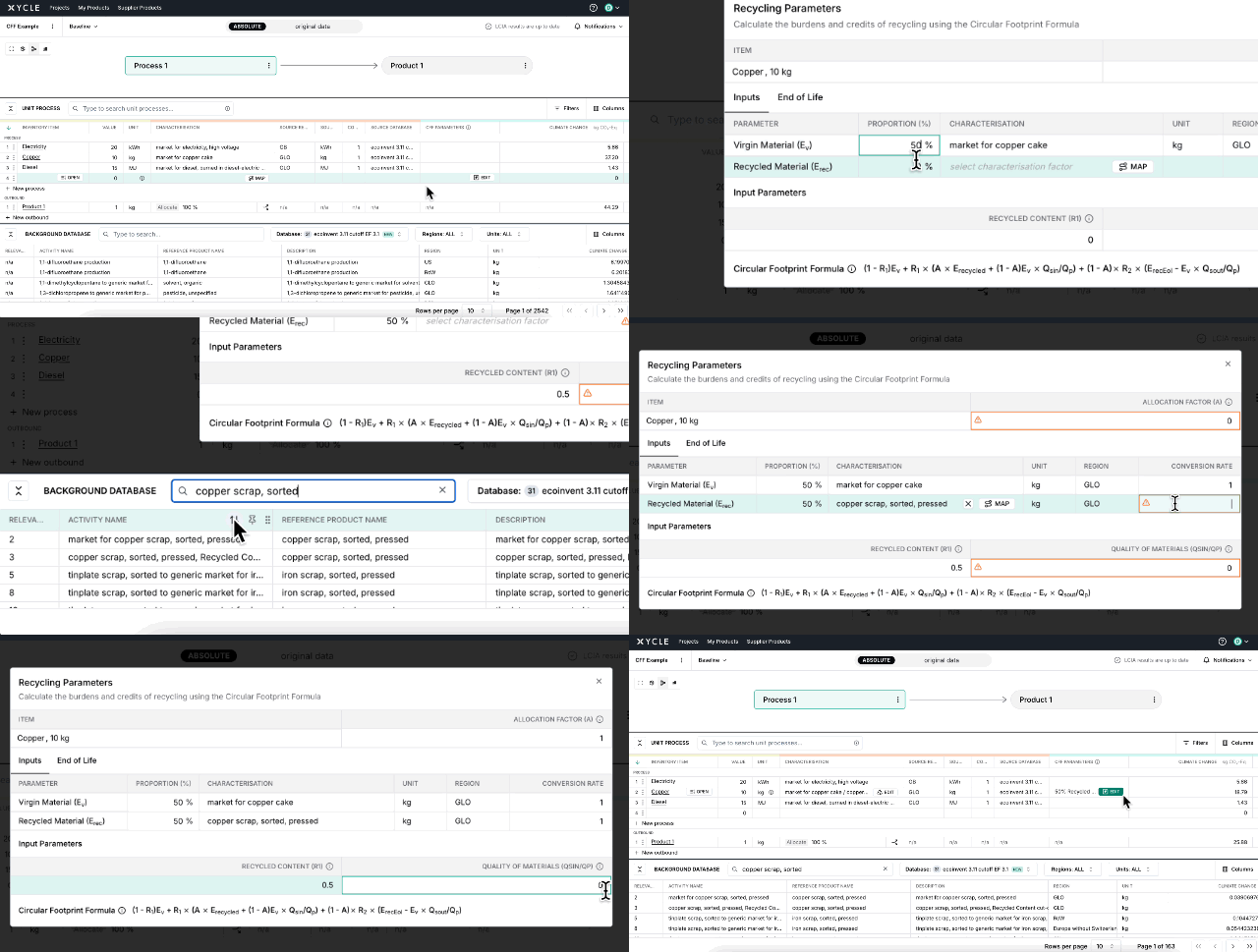
1. Open the CFF Editor
In your LCA table, scroll to the CFF column and click “Edit” for the relevant inventory item.
2. Enter Recycled Content Percentage
Input the percentage of recycled content used in the material (e.g. 50%).
This value is used to calculate the share of recycled vs virgin material in the total impact.
3. Map to a Recycled Dataset
Use the Background Database to search for a corresponding recycled material dataset (e.g. “aluminium, recycled” from ecoinvent).
Click “Map” to connect this dataset to your inventory item.
4. Set Allocation and Quality Parameters
Apply values for the Circular Footprint Formula inputs:
- Allocation Factor (A): Use 1 for closed-loop recycling where recycled material replaces virgin.
- Quality of Secondary Material (QSIN/QP): Use 1 if the recycled material is of equivalent quality to virgin input.
These values ensure that the system recognises the correct impact distribution across product life stages.
5. Input Conversion Rate (if applicable)
Enter a conversion rate if transformation or reprocessing changes the material quantity (e.g. 1.2 kg input for 1 kg output).
6. Review and Exit
Exit the CFF editor. Your LCA table will now show the updated impact reflecting your recycling assumptions.
Final Notes
- CFF is mandatory for certain product categories, particularly under the Battery Regulation.
- Make sure all related materials have the correct mapping and parameterisation to avoid inconsistencies in LCIA results.
- For advanced use, refer to official PEF documentation or regulatory guidance.